Introduction
Print-on-demand is often described as a low-inventory business model. In practice, it is an information-and-production model: each order must travel accurately from storefront to artwork file, garment, print station, curing process, inspection, packing and shipment. The process becomes difficult as order volume grows because variation grows with it. Different designs, garment sizes, colours, placements, destinations and customer notes all create possible failure points.
Industrial DTG printing can support a scalable POD workflow when it is implemented as part of a controlled line. The printer matters, but so do order routing, artwork approval, garment staging, operator instructions, maintenance, quality checks and exception handling. This guide outlines a practical operating model for apparel brands, print shops and fulfilment partners who are assessing industrial direct-to-garment production.
The examples are intentionally operational rather than promotional. Actual output depends on design coverage, garment mix, print mode, staffing and finishing equipment. A trustworthy plan starts with measured jobs and documented decisions.
Define the POD Promise Before You Select Equipment
Every POD business makes an implicit promise to its customer: a product range, expected appearance, order cut-off, production window, shipping service and reprint policy. Document this promise before deciding what an industrial DTG printer must do.
Create a simple service matrix
| Product group | Example | Workflow question |
|---|---|---|
| Core cotton T-shirts | Full-front, full-colour artwork | What is the approved print area and garment colour range? |
| Premium hoodies | Larger designs, thicker material | What loading and curing settings are needed? |
| Small-logo orders | Left-chest or sleeve placement | Is DTG the best route or should a separate transfer workflow be considered? |
| Campaign or seasonal designs | Short demand spikes | How will artwork approval and replenishment be managed? |
| International orders | Different labels and packing requirements | Where are the final inspection and shipping data checks performed? |
This matrix prevents a common mistake: buying equipment for the average order while ignoring the orders that create the most rework. It also makes supplier conversations more useful because the factory can propose tests against a defined product range.
Build the Workflow in Controlled Stages
1. Order intake and routing
Start with a clear handoff from commerce platform or sales team to production. Each order record should include an order ID, garment SKU, size, colour, print placement, artwork version, quantity, destination and any special instructions. If order data reaches the printer operator in multiple formats, errors become likely.
For a growing operation, establish a daily production board or digital queue. Group jobs by garment type, colour or preparation requirement only when doing so does not compromise turnaround promises. The system should show exceptions clearly: missing artwork, non-standard placement, customer proof pending, unavailable garment or special finishing requirement.
2. Artwork preflight and approval
Artwork preflight is the first quality gate. Confirm print dimensions, transparency, placement, file version, colour expectations and customer approval status. Create reusable RIP presets for common garments and approved artwork styles. A production operator should not need to reinterpret an email or chat message to know how to run a job.
Keep a reference record for every approved product/design combination: the source file, dimensions, placement note, garment SKU, print mode and any special preparation instruction. This turns repeat orders into a controlled process rather than a fresh setup.
3. Garment staging and preparation
Stage garments by production queue with visible order identification. Ensure sizes and colours are checked before preparation; a correctly printed wrong garment still requires a reprint. For dark garments in a DTG workflow, use the approved pretreatment procedure and allow the planned preparation time. Treat pretreatment as a measurable process, not an invisible task between order and print.
In factory testing, buyers should ask to see how garments are identified, prepared and loaded. A polished printer test alone is not evidence of a scalable POD line. The routine around the printer determines whether a unique customer order stays linked to the correct garment.
4. Printing with repeatable presets
DTG printing should operate from approved presets rather than one-off adjustments whenever possible. A preset may include garment profile, print area, resolution mode, white-ink setting, artwork placement and curing reference. The operator still performs visual checks, but the system reduces variability across shifts.
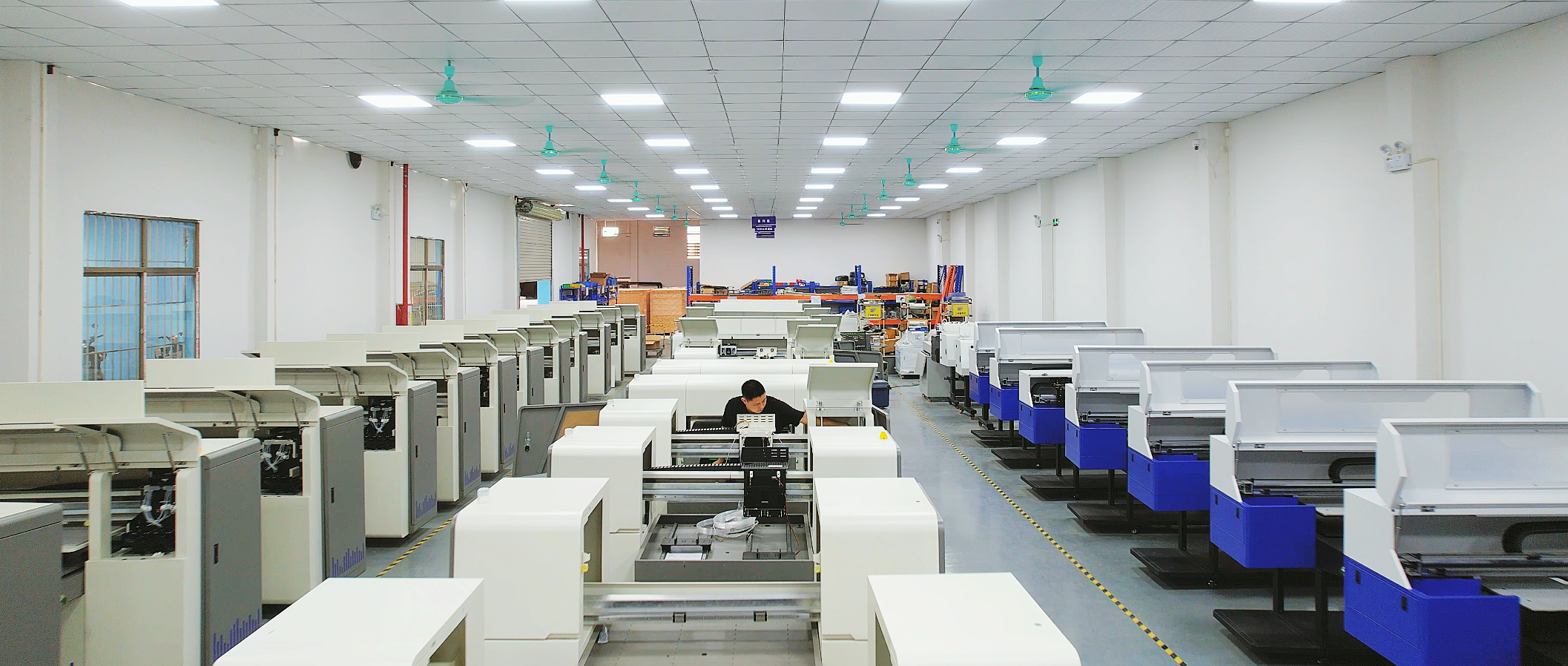
For industrial equipment such as the SHENLAN SL DTG-X2S, buyers should match the usable print area and configuration to the actual design programme. SHENLAN lists a maximum print area up to 600 × 450 mm and industrial DTG printing with two industrial print heads for this model. Confirm the latest data sheet, required site conditions and the suitability of your garments before basing a production plan on those figures.
5. Curing, inspection and reprint decisions
The print is not complete when the printer finishes. Establish a curing standard for each product class and document it. At the quality gate, check placement, colour appearance, visible artefacts, garment condition and order identification. If a defect is found, route the item into a defined reprint process instead of informal workarounds.
Record common reprint causes: wrong garment, missing pretreatment, placement error, artwork mismatch, colour issue, curing problem or shipping damage. Over time, this data tells the business where to improve. For example, repeated placement errors may be solved by a loading guide; repeated artwork errors may point to the preflight stage.
6. Packing and shipment inspection
POD production is completed only when the right order leaves in the right package. Use a final scan or checklist that matches the printed garment to the order ID, packing slip, label and destination. For export projects or equipment procurement, the same discipline applies to shipment inspection: confirm the agreed configuration, accessories, protection and documents before dispatch.
Design for Scale Without Losing Control
Scaling should reduce unnecessary decisions at the operator level. A practical scaling model separates routine work from exceptions.
Standardise routine work
- approved garment and artwork presets;
- visual placement guides;
- start-of-shift and end-of-shift maintenance checklists;
- named quality checkpoints;
- standard photo record for first-off samples or issue resolution;
- defined packaging and label instructions.
Make exceptions visible
Create a dedicated exception queue for orders that need customer approval, unusual placement, replacement garments, special fabric testing or revised shipping details. Do not let these jobs sit invisibly inside a general production queue. Visibility protects turnaround for standard orders and gives customer service a factual update.
Measure the right indicators
Avoid managing only “pieces per hour.” Track on-time completion, first-pass quality, reprint reason, artwork-preflight exceptions, operator intervention, garment availability and order-to-dispatch time. The goal is a stable delivery experience, not simply a busy printer.
What to Validate During Factory Testing
Before an industrial DTG purchase, run a test based on the future POD workflow. Send representative artwork and, if possible, target garments. Ask the supplier to document:
- garment and artwork received;
- preparation method used;
- selected print area and settings;
- print and curing sequence;
- visual inspection result;
- recommended daily maintenance;
- installation preparation and operator training plan.
This is also the time to discuss export support. Confirm machine dimensions, access clearance, electrical requirements, shipping method, packing approach, documents and how the team will handle remote technical questions after arrival. These details are not administration; they protect the planned launch date.
Installation Preparation for a New POD Line
Prepare the site before the machine arrives. Check power supply, grounding, ventilation, floor condition, working clearance, garment staging space, curing location, internet or file-transfer process and waste-handling procedures. Plan who will receive the equipment, who will be trained, who signs off test samples and who owns daily maintenance.
The first production week should include controlled trial runs. Use a small set of approved designs and garments to verify placement, colour, curing and order routing. Only then increase the product range or order throughput. This phased start is more reliable than switching a live store to a new line on day one.
FAQ
What is the first step in setting up a DTG POD workflow?
Start by defining the products, garments, designs and service promise. Then map the order from intake to packing. Equipment selection should follow this workflow brief.
How do I reduce POD reprints?
Use a documented preflight process, garment checks before preparation, approved presets, a curing standard and a clear final inspection point. Track reprint reasons so fixes target the real cause.
Can an industrial DTG printer handle unique designs every day?
Digital DTG workflows can be suited to frequent artwork changes, but operational success depends on file control, garment staging and standard settings. Test the process using your expected order mix.
What should be checked before a DTG printer is shipped internationally?
Confirm the agreed configuration, machine identification, accessories, packing condition, export documents, site requirements and support contacts. Request a documented shipment inspection where appropriate.
Do I need a separate quality-control step after DTG printing?
Yes. Printing, curing and final inspection are separate control points. A quality step protects the customer experience and creates useful data for process improvement.
Conclusion
A scalable POD line is built from reliable handoffs. Industrial DTG printing can be a powerful part of that line when order data, artwork, garment preparation, printing, curing, inspection and packing are treated as one controlled system. Begin with representative products, test the whole route and grow only after the team has repeatable records and checkpoints.